Bridging Web2 and Web3
You didn’t come this far to stop
Two Days That Changed the Conversation
What does it actually take to connect two worlds that rarely speak the same language, the reliability of Web2 systems and the promise of Web3 innovation?
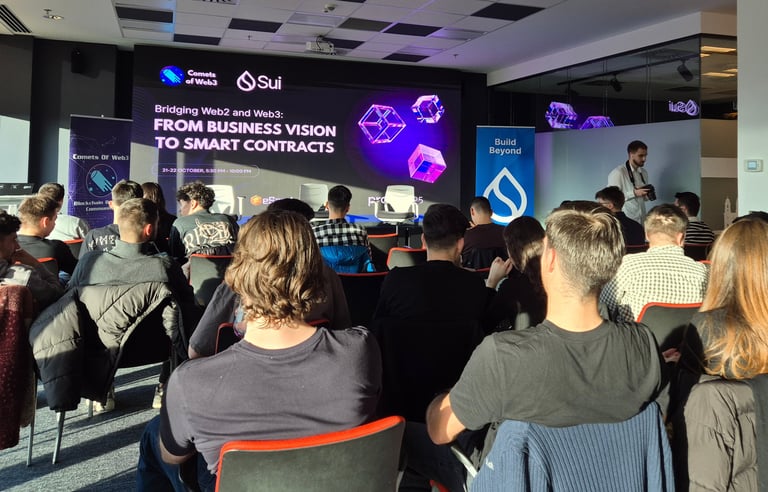
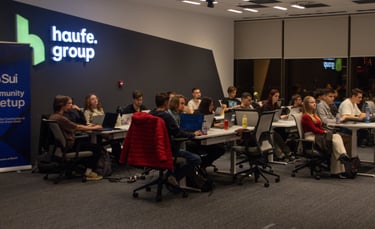
Hosted at Haufe Group HQ, powered by Comets of Web3 and the Sui Foundation, and supported by partners like APE Consulting, eSand, PROW, the stage was set for an ambitious experiment: take industry professionals, startup minds, and curious developers, and walk them through what it actually means to bridge visions with execution.
Panels with Depth, not Hype
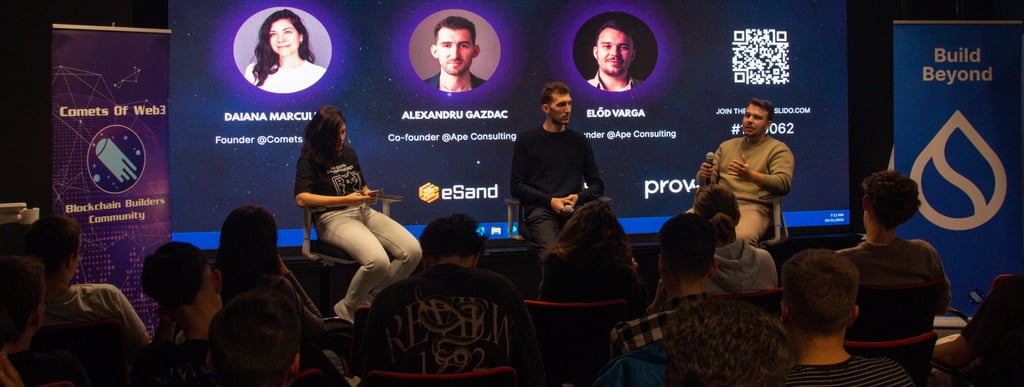
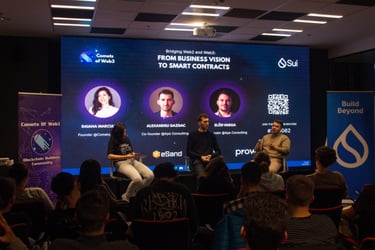
The first evening opened with a panel that quickly set the tone for what this event aimed to achieve.
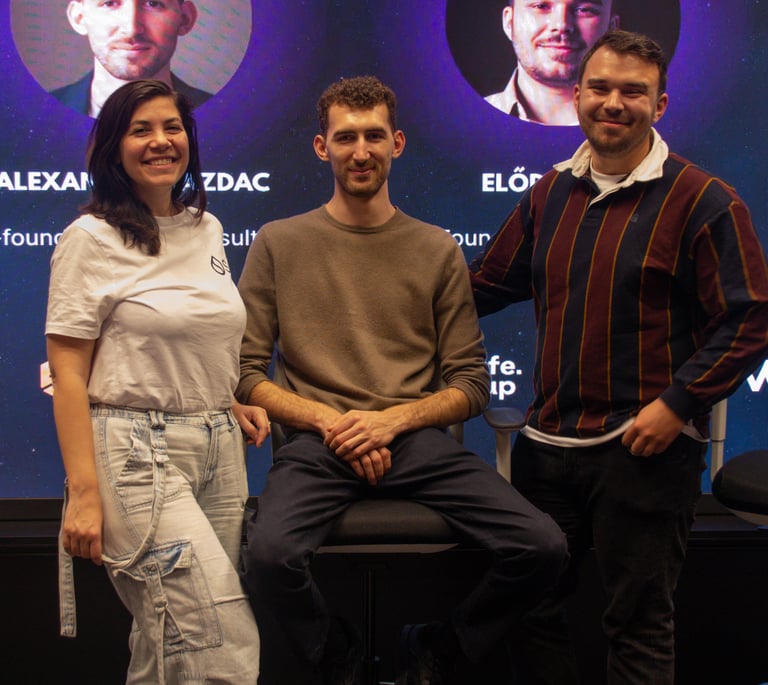
Our special speakers Daiana Marculescu, Alexandru Gazdac, and Előd Varga didn’t come with abstract predictions. They came with experience to back up their claims.
They unpacked what companies face once they decide to explore blockchain, the messy middle no one posts on LinkedIn: navigating legacy systems, aligning stakeholders, questioning whether a use case even makes sense, understanding legal constraints, and learning where a smart contract brings value and where it doesn’t.
People in the audience weren’t just nodding absently. People brought real obstacles to the table, taking keynotes of interesting facts, and pushed the discussion into hands-on reality to gain new insights into their unique scenarios. It was a grounded, honest, and immediately valuable panel; the type of conversation that doesn’t usually happen on main stages or keynote slides.
It felt honest. It felt useful. And it set the expectations for the rest of the program.
Workshops That Turned Curiosity Into Capability
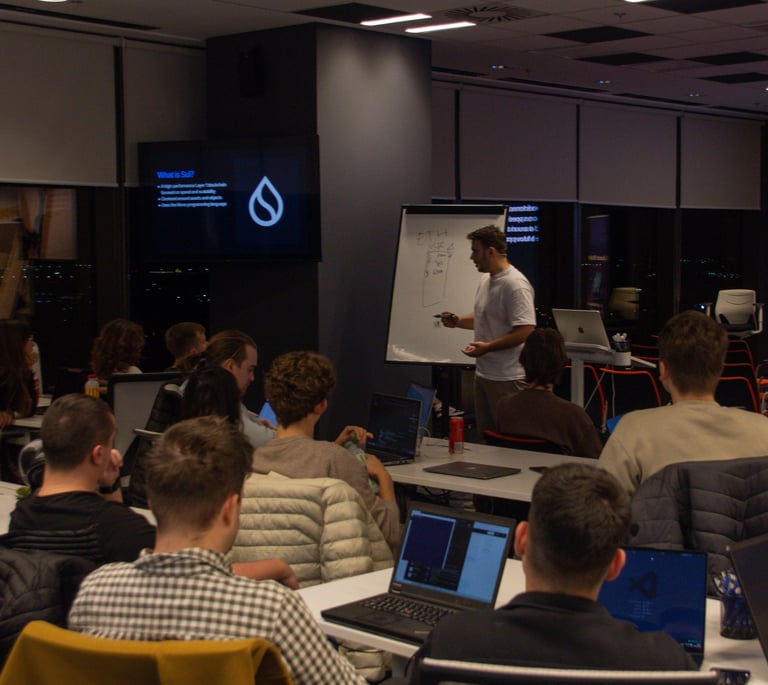
After the panels came the moment most people were secretly waiting for: laptops out, workshop mode on.
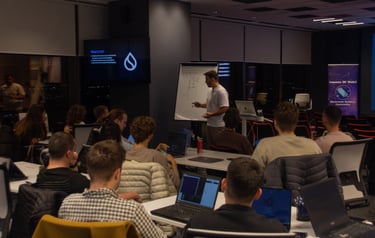
What started as a mixed crowd of software engineers, product leads, and founders quickly turned into a room of hands-on builders. Alexandru walked participants through the first steps into blockchain and Sui architecture, getting their introductory contact with Move fundamentals, object-centric approach, and the logic behind powerful smart contracts.
Some participants came with years of experience in backend and frontend development; others were stepping into dApp for the first time. But the room didn’t split, it merged into one. People leaned across tables, compared outputs, and tested each other’s logic to search for flaws.
By the end of day one, the transition was visible. A Web2-heavy audience beginning to experiment with new notions and ideas with a determination that surprised even them. Day two only amplified it, shifting from introductory concepts to deeper Sui Stack exploration and slowly perfectionating their full dApp implementations.
What began as a conceptual “bridge” discussion quietly evolved into the familiar energy of a Sui Dev Program cohort, just with a more corporate edge.
When It Ended, It Didn’t Actually End
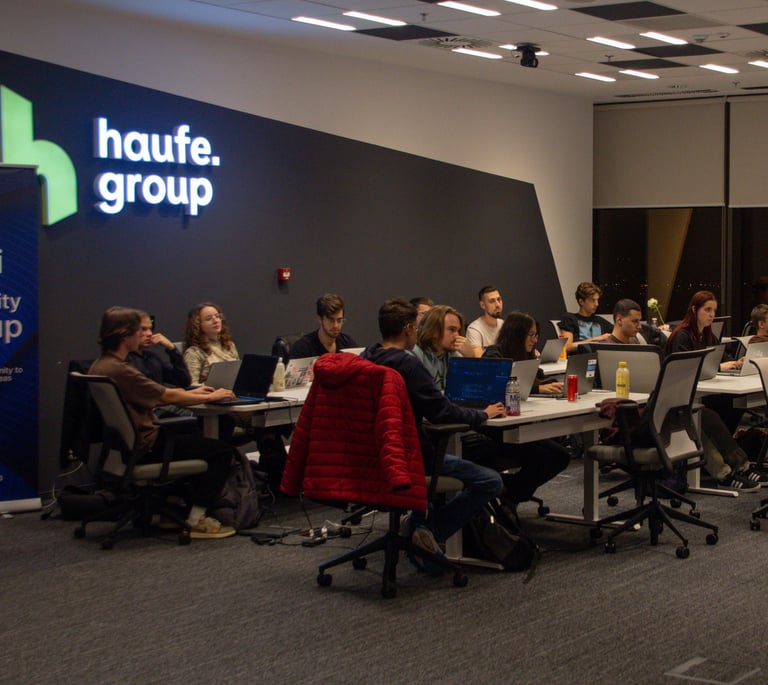
Even stepping away from the main session didn’t slow anything down. Small groups gathered not because they had to, but because the conversations were simply too interesting to pause.
It didn’t feel like traditional networking. The way participants stayed after hours, the way they celebrated small breakthroughs, the way ideas traveled from table to table; it all felt like the early spark of a builder community forming in real time.
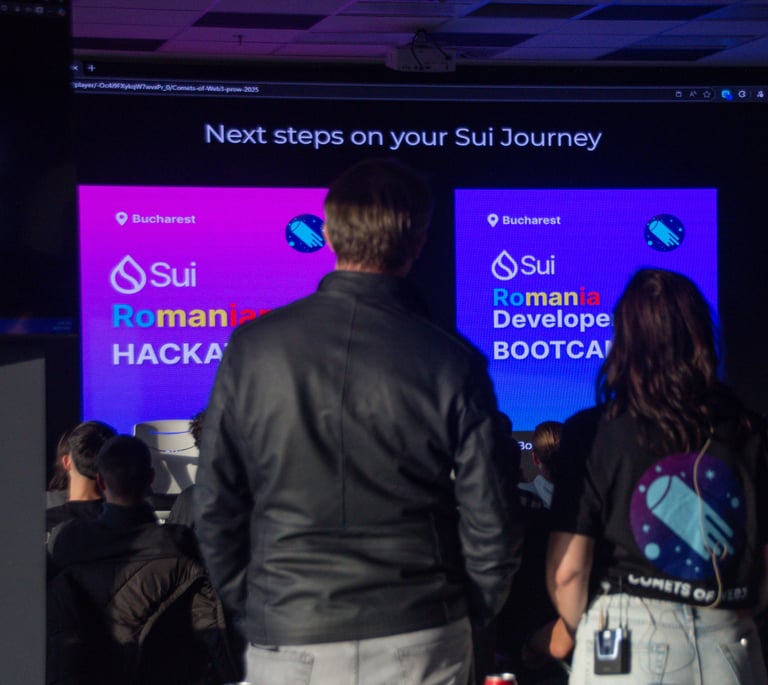
And by the end of the program, several participants weren’t just absorbing knowledge; they were actively planning next steps. Some wanted to keep exploring smart contracts; others were thinking of internal prototypes; a few even floated the idea of joining future hackathons or forming teams for upcoming programs.
Not loud hype. Real momentum.